

Growing a High-Performing Team with a Powerful Culture
Rebuilding a Design and Research Team from the ground up
I scaled the Design & Research department from 7 to 25 people across five disciplines and spearheaded the Product team's Agile transformation, achieving improved efficiency, faster time to market, and better product quality. I also cultivated a growth-oriented culture that developed talent, reduced attrition, and enhanced performance, leading to company-wide adoption.

POSITION / DIRECTOR OF DESIGN & RESEARCH

INDUSTRY / FINTECH

COMPANY SIZE / 500+ EMPLOYEES

PE BACKED / HG CAPITAL

PERIOD / 2020 - 2022
Understanding the team, culture and challenge
When I joined Dext, the team were unhappy, attrition was high, and the reptutation of Product Design was waining due to the siloed ways of working, lack of discipline development and leadership.
Squads without Designers were crying out for them, while those with Designers complained that they “take too long to deliver.” This led to a general hesitation to invest in the discipline, leaving the Product team under-resourced and over-stretched.
With a recent PE-backed funding round, fierce competition disrupting the accounting tech-stack and a product showing signs of age, there was a clear expectation that, moving forward, the Product team's output needed to be more impactful than ever before.
The question. How do we scale the Design and Research in a way that improves their contribution to commercial objectives whilst building a strong and stable community of practice?
My Approach
1
Build a respected community of practice
How I fostered a culture of expertise and personal development.
2
Hire the right people at the right time
How I ensured we were able to hire and retain talent.
3
Evolve delivery and improve collaboration
How my team led the transition to Agile.
1
Build a respected community of practice
The most impactful Design and Research teams are grounded in expertise, build structure around what they do, and constantly develop their craft. With a team that had lacked clear direction and placed focus on reactive delivery, changing this culture was going to be a challenge.
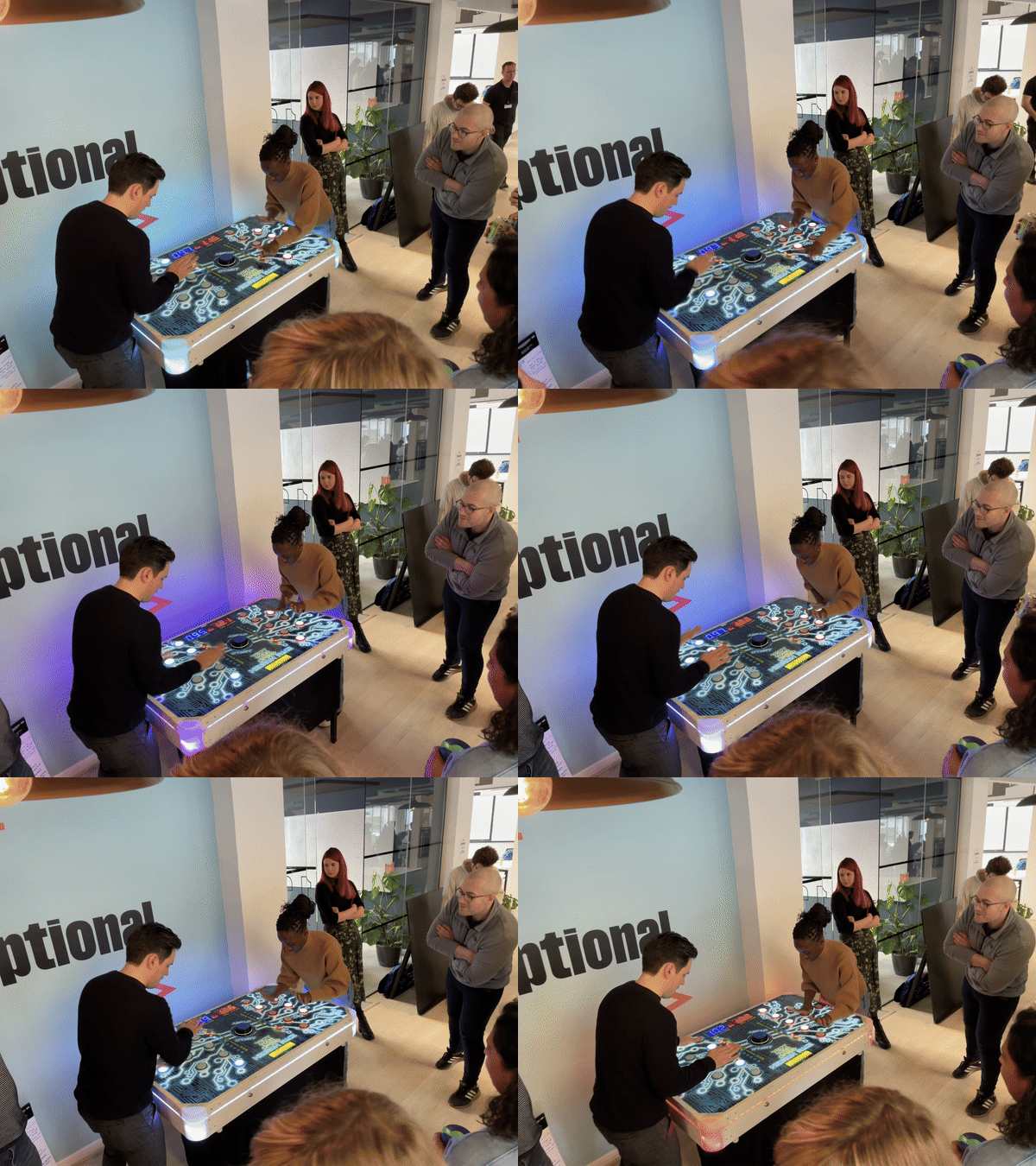
Ceremonies that galvanise the team
Although every team member had their way of working, we needed to create a unified approach that brought all this expertise together and encouraged a consistent and reliable output.
Here are some of the key team ceremonies that allowed us to collaborate effectively, share expertise and become trusted delivery partners that can get things "out the door".
- Estimation - This bi-weekly team meeting allowed the team to break down their work together and challenge each other's approach.
- Retro - Every couple of weeks, we would meet to review how we are working. We decide what we want to Start, Stop or Continue.
- Design Critique - Every week, we would come together as a group to review each other's work and give constructive feedback.
- Townhall - Every month I would share important business comms to the team answer any questions and create an open forum for discussion.
- Show & Tell - Led by one of the team each month, we would explore an interest or expertise they have.

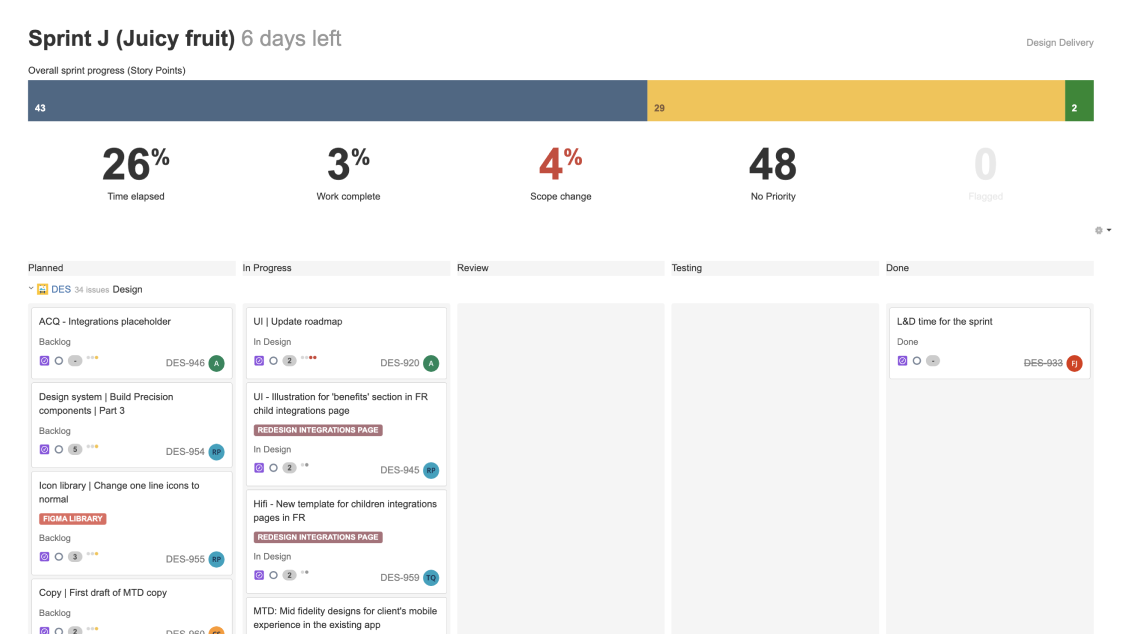
New live sprint progress page. Transparent and open to all.
62%

91%
Av. Sprint Completion Rate
Building an environment that supports growth
Amongst the chaos of a rapidly growing Product team, it became easy to focus purely on delivery and not on what the team needed to develop as a function. That's why it was important to create the right amount of infrastructure to ensure we invested in every single person's development.
Building a comprehensive Progression Framework enabled the team to create clear personal development objectives, define career roadmaps, and foster transparent, healthy conversations around performance. It also allowed us to identify skills gaps within the team that needed to be developed or filled through hiring.
We called this Own Your Growth, and it was so successful at developing my team that it was rolled out across the business.
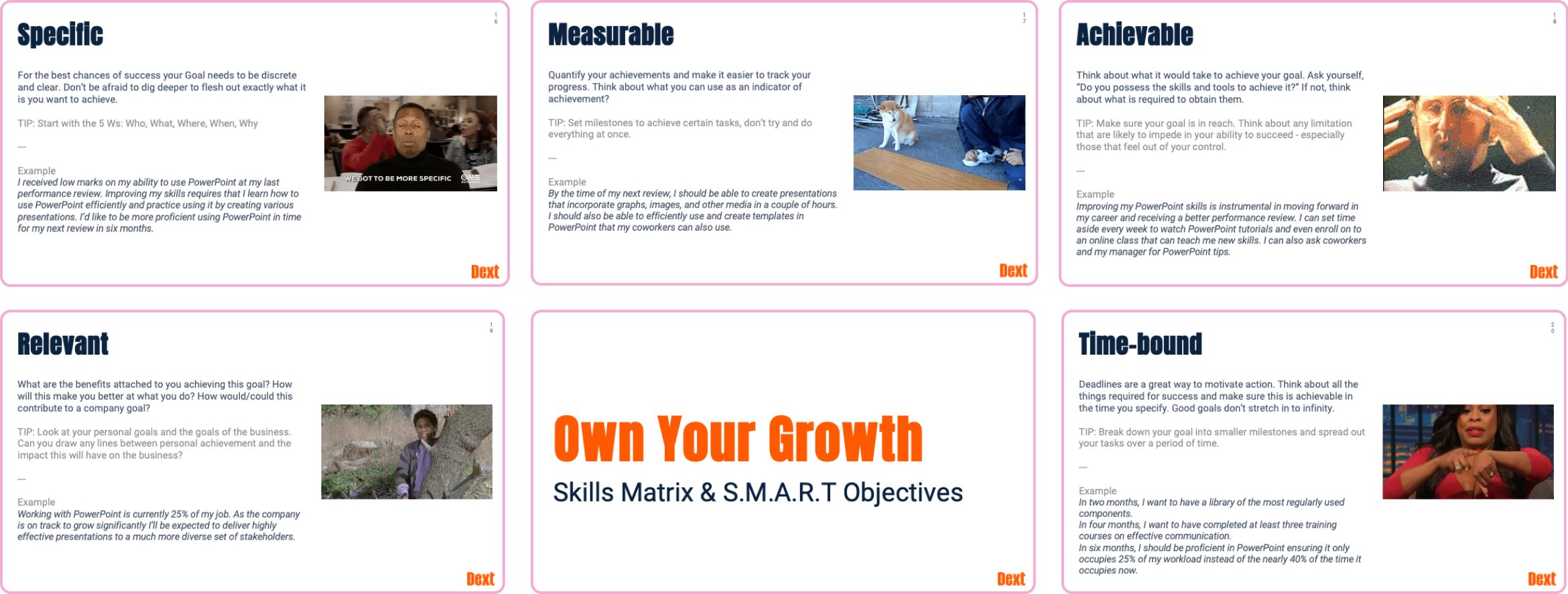
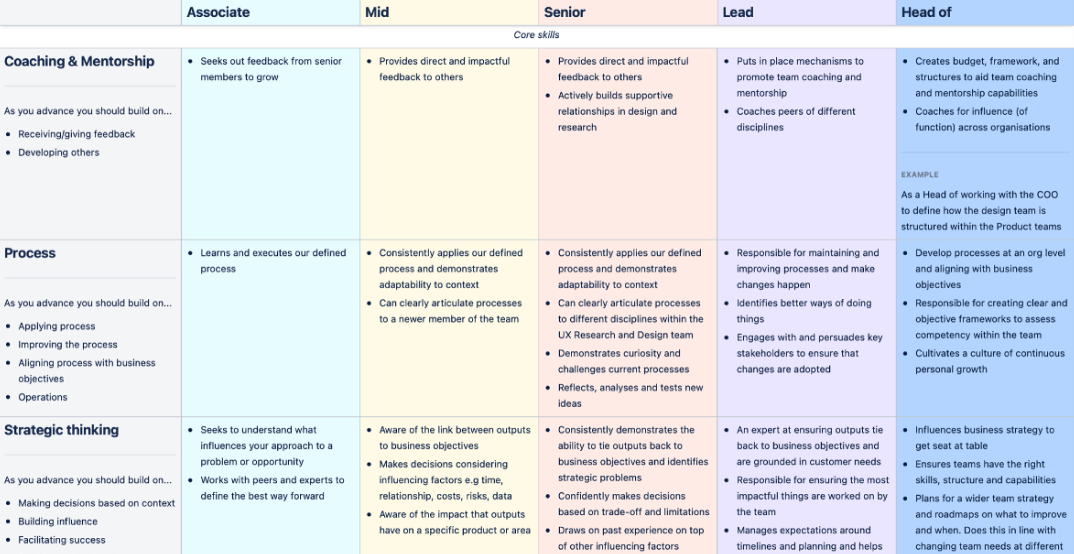
Slides from the "Own Your Growth" launch session and the new progression framework.
7
Promotions in 18 months
50+
Growth Objectives Created
Repairing broken bridges with key stakeholders
Improving the way we work would only get us so far. Investing in our relationships across the business was fundamental to ensuring our reputation reflected our contribution.
I worked very closely with our CTO to help identify where the team could improve and how we could work together to better integrate our teams. This resulted in many joint initiatives, including a new series of structured bootcamps, to improve the team's understanding of how the product has been built.
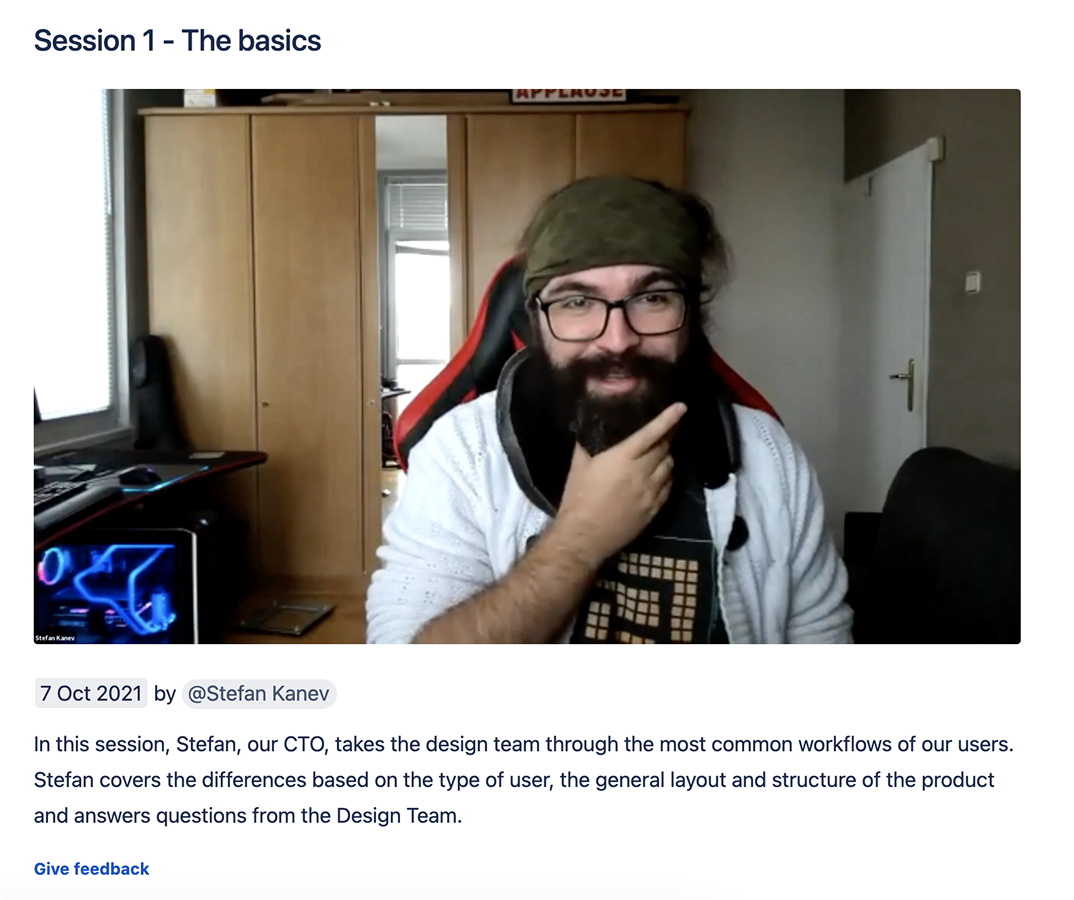
The Dext CTO leading a knowledge-sharing session with the team
Underpinning everything with our Mission, Vision and Values
A resilient practice needs guardrails and alignment with the rest of the business. To ensure we were able to do this, I worked with the team to define a set of statements and values that formed the foundations of everything we did.
Our Mission, Vision, and Values formed the foundations of everything we did, from defining personal objectives and hiring the right people to collaborating with other teams and delivering work.
Our Values

Plucky Pioneers

Craft Experts

Always United
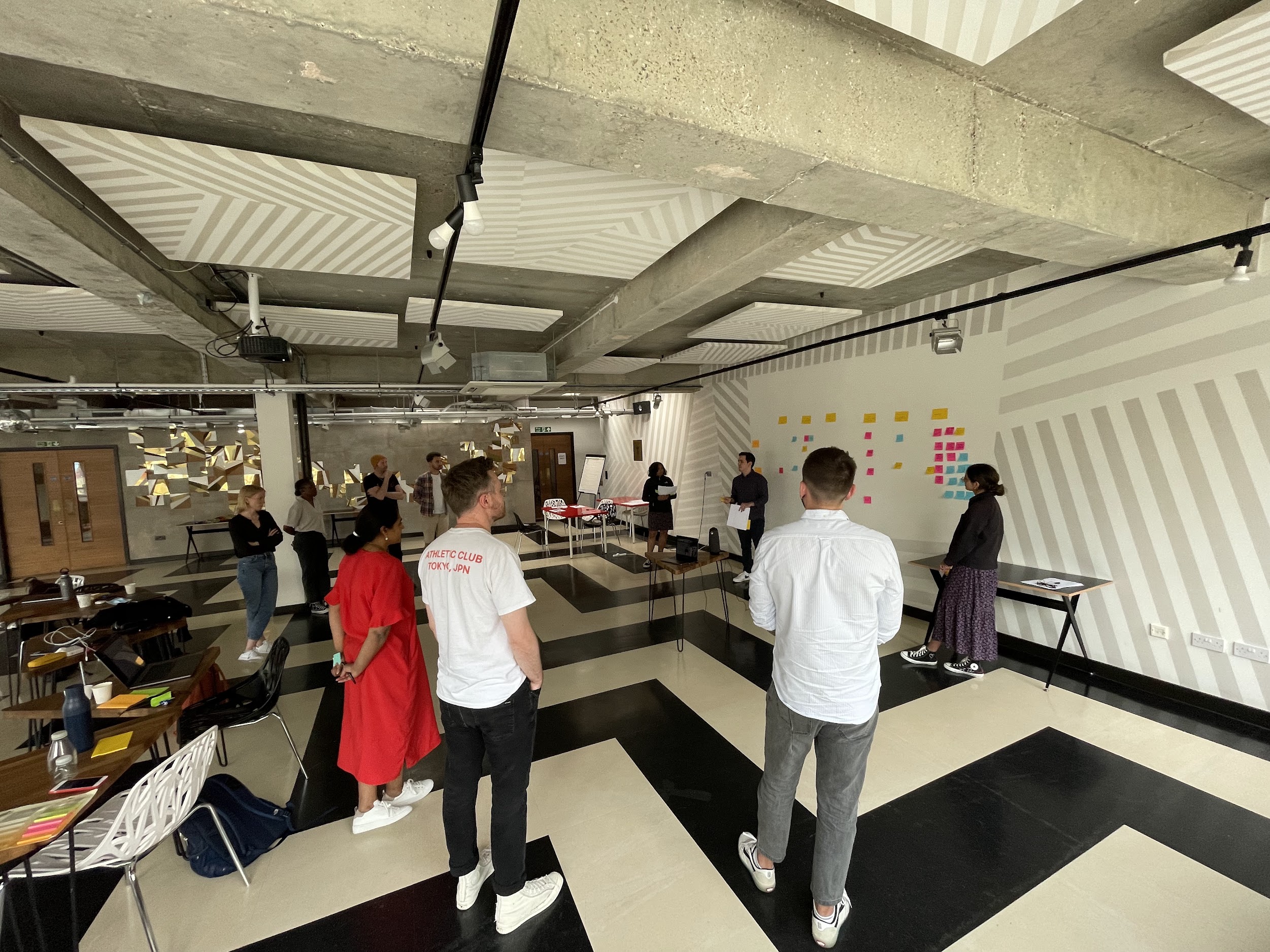
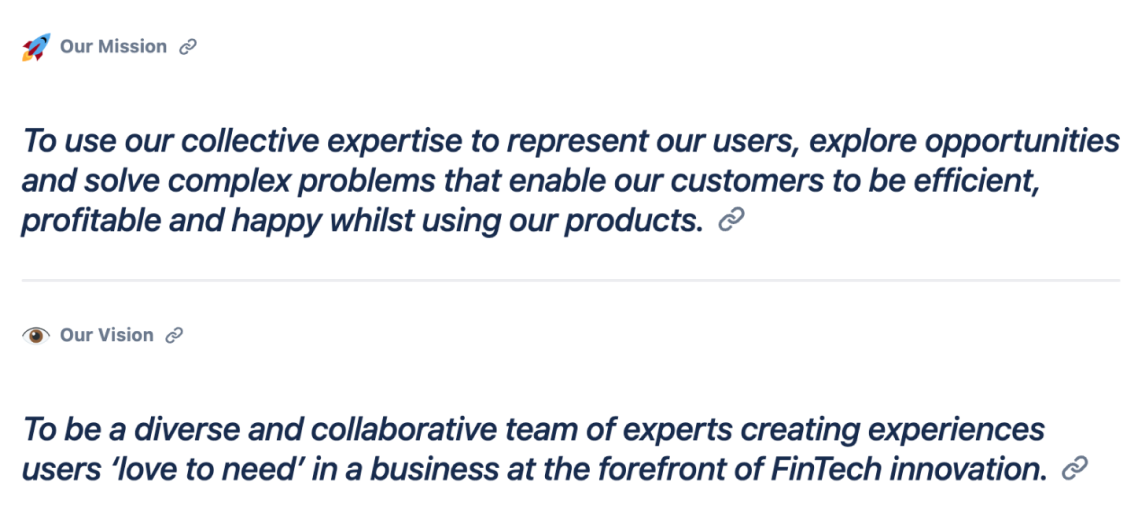
Mission, Vision and Values Workshop with the team.
2
Hire the right people at the right time
"Growth at all costs" is something I try to steer clear of, as it gets in the way of real, sustainable growth of a team. Instead, I focused on building the infrastructure that would allow us to deliver against our roadmap whilst maintaining stability as we scaled.
As part of this I introduced a new team structure, improved hiring candidate journey, and people managers.
Creating a team structure that could withstand rapid growth
The team had expressed concern about how much more pressure growing would place on them as individuals. At this point, I knew some of the team were close to burnout, and we risked losing them.
To make sure we had the resilience we needed to move forward, I changed how the team was organised to focus on the following.
Commercial Alignment & Focus
I worked with the rest of the product leadership to review our roadmap for the next 12-18 months and collectively decide where we needed dedicated resources (and, more importantly, where we didn't).
Displine Maturity & Expertise
No more generalists. Dext faced some extremely complex issues that required expertise to resolve. I hired experienced discipline experts and people managers to lead and develop UX, UI, Content, and Research.
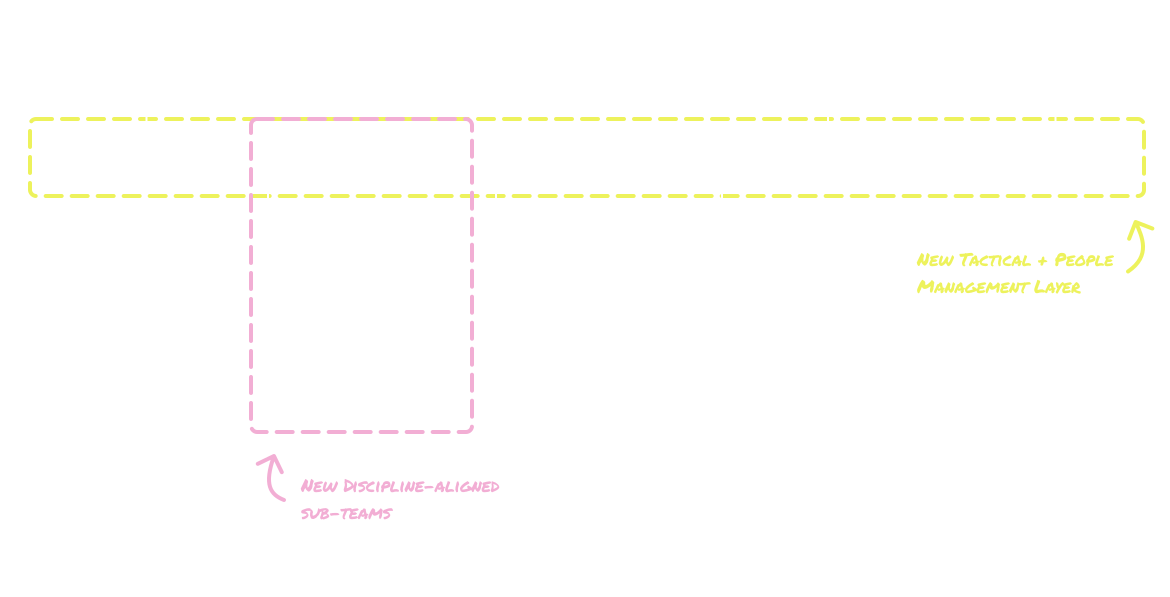
Our new team structure, designed to scale.
Attracting the right skill set and culture
Off the back of Covid, the hiring landscape was extremely competitive, and as we grew, it was essential to hire the right people.
To pique the interest of prospective team members, I completely revamped our hiring process from end to end.
At first glance, accounting isn't that "sexy," but the Design and Research team was blooming into a bit of a powerhouse. I wanted candidates to know that if they joined Dext, they would be part of a really smart group of people doing great work!
As a result of introducing a new structured candidate journey, revamped Job descriptions and improved cultural evaluations, we was able to hire the right people on average in 4-6 weeks. We also saw average tenor increase from 18 months to 2+ years.
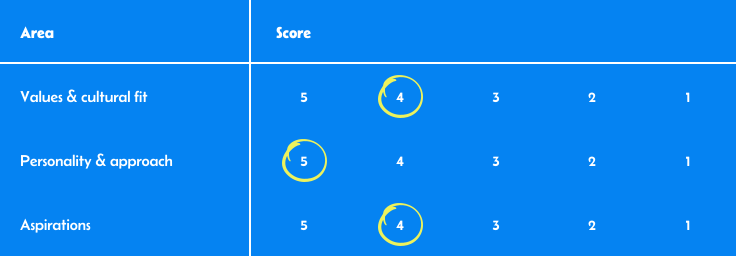
Interview score cards.
How we make decisions
Average > 3

Yes
Average = 3
Maybe
Any Area < 3
No
3
Evolve delivery and improve collaboration
It's impossible to scale your team effectievly in silo. I collaborated with the Product and Engineering teams to ensure that the overall team structure was designed to foster collaboration and maintain a positive cultural dynamic as the team expanded.
This directly impacted our approach to delivery and triggered a product-wide Agile transformation that I spearheaded alongside the Ops teams to improve output across the board.
Leading the journey to Agile
I took the opportunity to use my team to demonstrate how improving our Agile ways of working could propel delivery teams to have way more impact.
Within six months of this transition, the Design team had delivered a record number of Story Points, and the general perception of the team was starting to shift. You could say "the team was too efficient", as for the first time, the rest of the squads were unable to keep up.
This is what triggered the org-wide transition to Agile!
Improving maturity across the business
In a company that had been focused on delivery for many years, the maturity of Design and Research was low across the board.
It was essential that all the work we had done to shake up the teams wasn't lost in the execution. That's why we created a set of artefacts such as the "Dext Design Process" document and embarked on a mini PR campaign to pollinate expertise, explain changes, and, crucially, gather feedback.
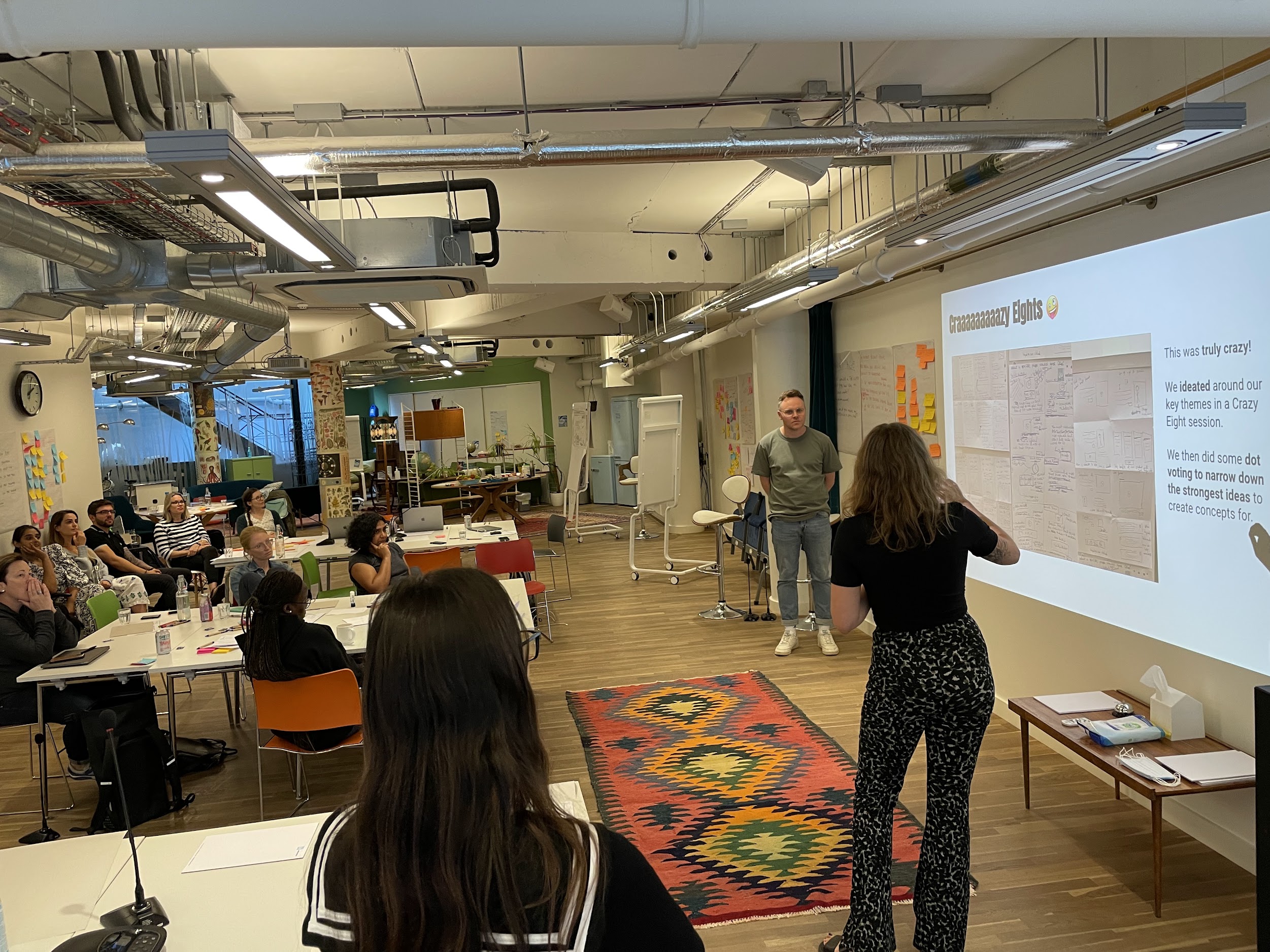
The team leading a Crazy-8s session with stakeholders
Creating an upgraded experience for our users
At the heart of everything we do is an incredible product that helps accountants and their clients every day. Below is some of the work the team delivered during this period. From the launch of our design system, Dexterity, to the New Practice insights dashboards.
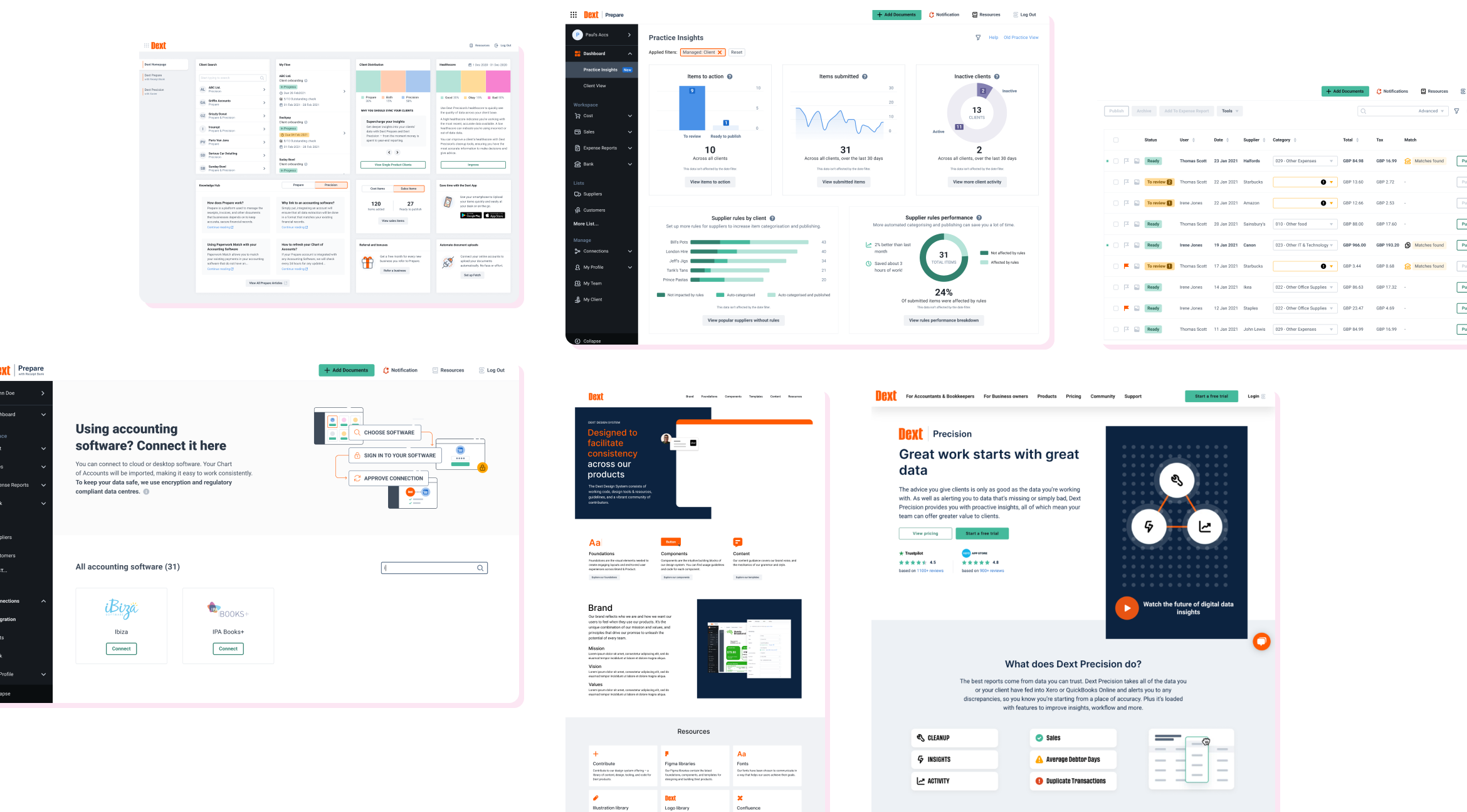
Achieving growth whilst building culture
I had a clear vision, and by building a team grounded in expertise, nurturing a fierce cultural identity, and fostering a collaborative environment, we achieved real and meaningful growth.
During my time at Dext, the team grew from 7 to 25, our products reached 1 million active daily users, earned a five-star rating on both the Google Play and Apple App Store, integrated two products, and revenue increased from 36 to 50 million YOY.
Most importantly, the team was happy and productive, maintaining a health score of 4.3 out of 5 and a sprint completion rate of 91%.
200%
Team Growth
4.3/5
Av. Team Pulse Score
91%
Av. Sprint Completion Rate
36m
50m
GBP In Revenue, YOY

App Rating
1 Million
Daily Active Users
Reflections and learnings
Leading the team at Dext has been one of the most incredible experiences of my career. Having the opportunity to build the foundations of a team and do it with an incredible group of people is something I will treasure.
The work I've done at Dext truly proves that investing in people can have a dramatic effect on overall commercial performance, and at Dext, Design and Research were a crucial part of driving the whole organisation forward.
More Case Studies
THINK I CAN HELP?
LET'S TALK